
Amethyst Geodes, Citrine Geodes, Quartz
What Are Geodes and How Are They Formed?
Jan
What are geodes and how are they formed? These geological wonders start as humble hollow rocks before transforming into glittering crystal through natural process. Whether you’re drawn to the deep purple of amethyst or the pristine sparkle of quartz, geodes bring raw beauty straight from the Earth into your home.
What Exactly Is a Geode?
From the outside, the geode looks rather ordinary – rough, rounded, brownish or grey. But split one open and you’ll find a hidden world of sparkling crystals growing inward from the walls. It’s like discovering a miniature crystal cave frozen in stone.
The word comes from the Greek geṓdēs, meaning “earthlike.” Rather fitting for something that starts life as volcanic rock or limestone before becoming something extraordinary.
Geodes range wildly in size. Some fit in the palm of your hand, perfect for a bookshelf or console table. Others stand over a metre tall – the kind of showstopping floor piece that transforms an entire room.
The Magical Formation Process
Here’s where it gets properly fascinating. Geodes take anywhere from thousands to hundreds of millions of years to form. Your average geode has been working on its interior design far longer than your house has existed.
The process happens in three stages.
Stage 1: Creating the Hollow Space
Everything starts with a bubble or cavity inside rock. How that space forms depends on the rock type.
Volcanic geodes begin their life when molten lava releases trapped gases. As the rock cools and solidifies, these gas bubbles get locked inside, creating perfect spherical pockets. Think of it like the air bubbles in Aero chocolate, but made of stone and destined for something far more spectacular.
Sedimentary geodes form differently. They might start from a tree root that rotted away, leaving a hollow space. Or minerals might build a hard shell around soft material that later dissolves. Either way, you end up with an empty chamber waiting to be filled.
Stage 2: Mineral-Rich Water Moves In
Once the cavity exists, groundwater carrying dissolved minerals begins seeping through the surrounding rock. This isn’t your everyday tap water – it’s loaded with silica, calcium carbonate, and various other elements that will eventually crystallise.
The porous rock acts like a slow-release sponge, allowing this mineral-rich solution to gradually fill the hollow space over millennia.
Stage 3: Crystal Growth Begins
This is where patience truly pays off.
Inside the cavity, tiny environmental changes – cooling temperatures, evaporation, pressure shifts – cause the dissolved minerals to precipitate out of solution. They form microscopic seeds on the interior wall, and these seeds slowly, incrementally, build outward into crystals.
The process works layer by layer, from outside in. First comes a tough shell of chalcedony (a form of quartz) that lines the cavity. Then, wave after wave of mineral-rich water deposits additional layers, each creating those distinctive bands of colour you see in polished geode slices.
The longer this continues, the larger and more spectacular the crystals become. Some of the most prized amethyst geodes have been growing for over 100 million years.
Eventually, you’re left with a hollow rock lined with glittering crystals – or sometimes completely filled with crystalline beauty.
Types of Geodes
Not all geodes are created equal. The minerals inside depend entirely on what was dissolved in the groundwater during formation.
Quartz Geodes
The most common variety, quartz geodes, contain clear, white, or smoky crystals. They’re brilliant for minimalist interiors where you want subtle sparkle without overpowering colour.
The crystals can be tiny and druzy (covering the entire surface like natural glitter) or large and well-defined. Either way, they catch light beautifully.
Amethyst Geodes
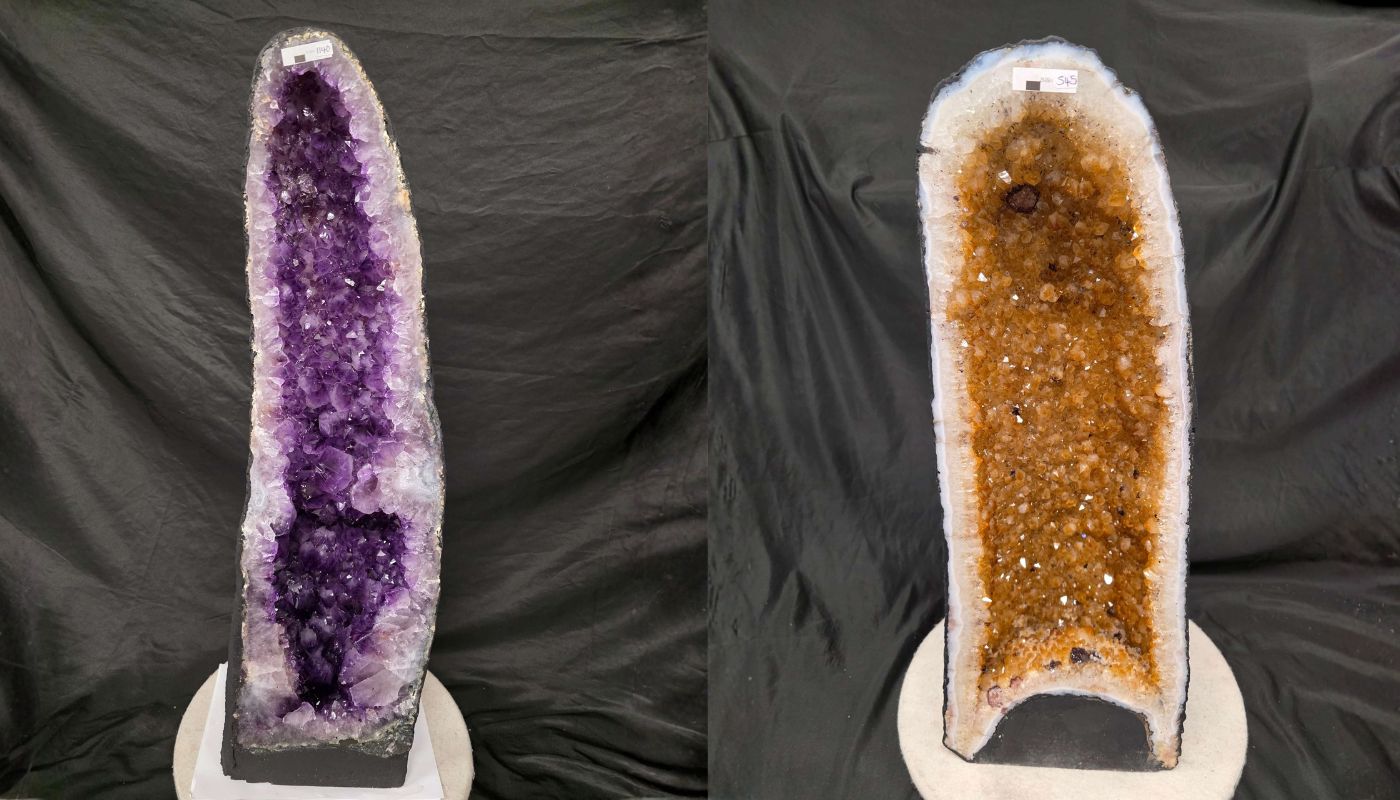
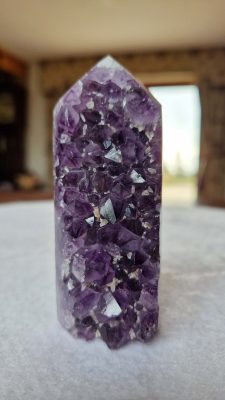
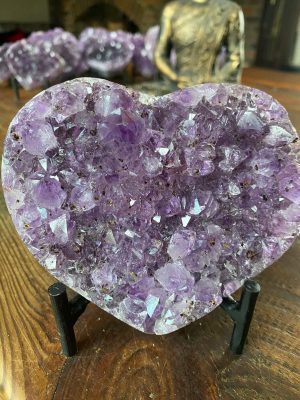
The crown jewel of the geode world. These contain stunning purple crystals ranging from pale lavender to deep violet, created by trace amounts of iron and natural radiation.
Large amethyst geodes from Brazil and Uruguay, often called “cathedral geodes” – make breathtaking floor pieces. They’re the kind of thing interior designers dream about.
Calcite Geodes
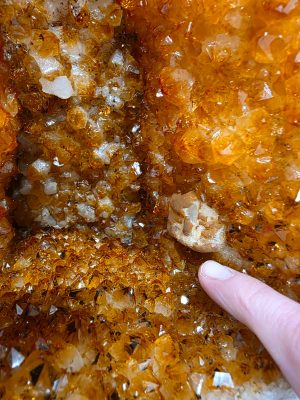
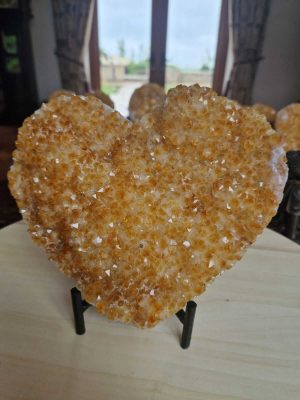
Calcite creates delicate, often translucent formations in whites, oranges, and yellows. These geodes have an almost sculptural quality, with crystal clusters that resemble frozen waterfalls or ice formations.
Perfect if you’re after something softer and more organic-looking.
Agate Geodes
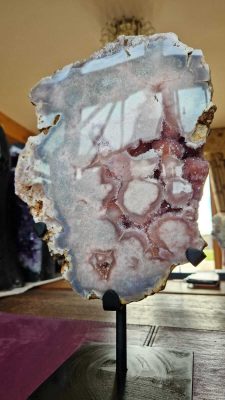
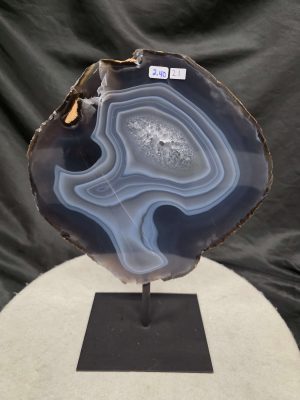
These showcase concentric bands in various colours – browns, greys, blues, and pinks. When cut and polished, agate geodes reveal mesmerising patterns that look hand-painted.
They work brilliantly as wall art or coffee table centrepieces, especially when backlit.
Where Do Geodes Come From?
The world’s most spectacular geodes come from specific geological hotspots.
Brazil and Uruguay dominate the market for large amethyst geodes. Their ancient basalt flows created perfect conditions for spectacular crystal growth.
Morocco supplies many of the calcite and quartz specimens. Mexico and Namibia also produce beautiful examples.
The UK Connection: Our Own “Potato Stones”
Britain might not rival Brazil, but we do have our own geode legacy.
The Mendip Hills in Somerset are famous for small geodes known locally as “potato stones” because of their lumpy, tuber-like appearance. These typically contain agate, quartz (including amethyst), and calcite.
Specific spots like Burrington Combe and areas around Dulcote Quarry have yielded specimens for generations. The limestone geology of the Mendips creates perfect conditions for geode formation.
How to Display Geodes in Your Home
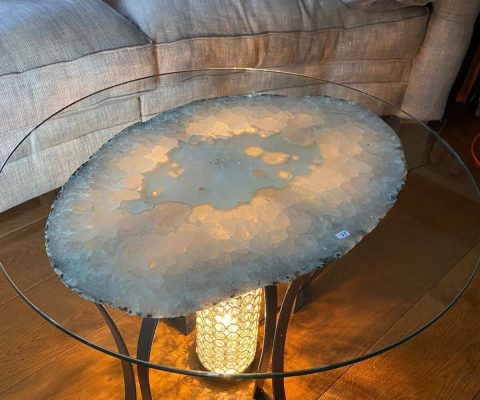
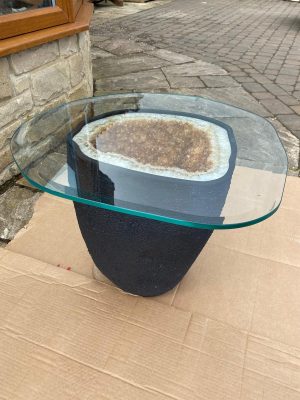
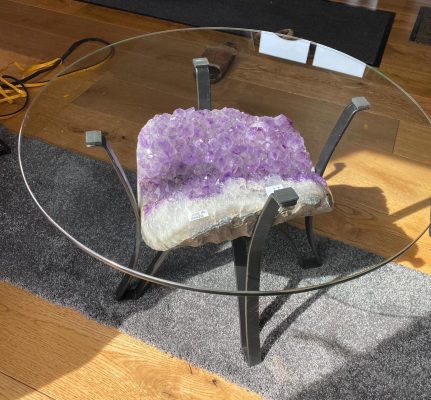
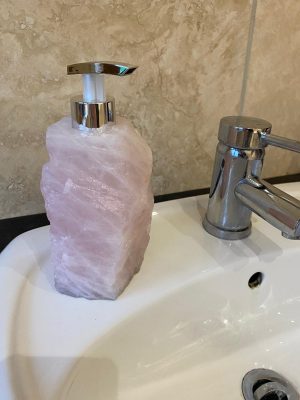
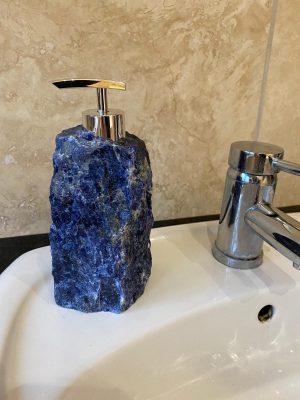
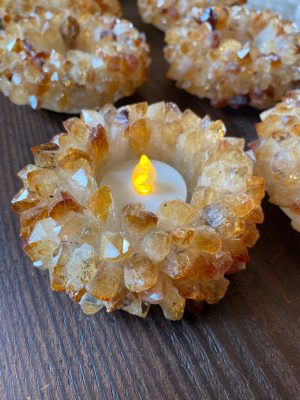
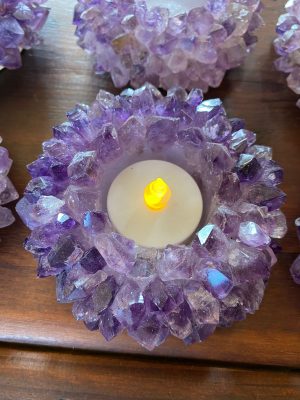
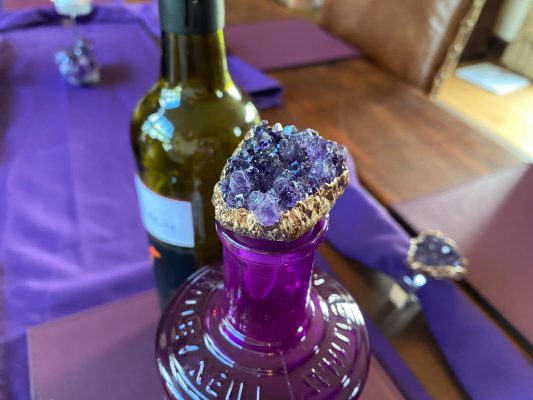
Geodes aren’t just geological specimens – they’re natural sculpture that brings organic luxury into modern living spaces.
Floor pieces: Large cathedral geodes (60cm+) work beautifully flanking fireplaces, in entrance halls, or anchoring a corner. They need space to breathe and proper lighting to show off their crystals.
Coffee table displays: Medium-sized geode halves (15-30cm) make perfect centrepieces, especially on glass or light wood surfaces where you can appreciate them from above.
Shelf styling: Smaller specimens add texture and interest to bookcases and floating shelves.
Backlighting: Translucent agate geodes are absolutely stunning when backlit. Place them near windows or add LED backlighting for evening.
Paired halves: When a geode is cut professionally, the two halves can be displayed together or separately. Some homeowners place matching halves in different rooms – a subtle way to tie spaces together.
Caring for Your Geode Display
Geodes are remarkably low-maintenance, which is part of their appeal.
Dust them gently with a soft, dry cloth or brush. For deeper cleaning, lukewarm water and a soft brush work well, just make sure to dry thoroughly.
Avoid harsh chemicals or ultrasonic cleaners, which can damage delicate crystal formations.
Keep them out of direct, prolonged sunlight if you want to preserve colour intensity, particularly for amethyst which can fade over time.
Why Geodes Work in Contemporary Interiors
They’re organic, yet geometric. Ancient, yet utterly timeless. Rough on the outside, spectacular within. This duality makes them incredibly versatile.
The purple tones of amethyst complement everything from soft greys to rich emerald greens. Clear quartz works with literally any colour scheme. Agate’s earthy tones bring warmth to contemporary spaces that might otherwise feel too clinical.
Quality geodes hold their value remarkably well. As natural, non-renewable resources with finite supply, particularly spectacular specimens appreciate over time.
Large Brazilian amethyst cathedrals have seen steady price increases over the past decade. Rare colour combinations or exceptionally large crystals command premium prices at mineral shows and auctions.
Frequently Asked Questions
How can I say if a geode is real?
Authentic geodes feel lighter than solid rocks of similar size due to their hollow interior. The crystals should be firmly attached to the matrix, not glued on.
Why are some geodes more expensive than others?
Size, crystal quality, colour intensity, rarity, and origin all affect pricing. Large specimens with well-formed, vividly coloured crystals command higher prices. Brazilian amethyst cathedrals and rare blue celestite geodes cost significantly more than common quartz varieties.
Can geodes be damaged or broken?
Whilst the outer shell is relatively tough, the crystals inside can be fragile. Handle with care, especially delicate calcite formations. Avoid dropping or knocking against hard surfaces. Amethyst can fade with prolonged sun exposure.
Where should I buy geodes for home display?
Look for reputable mineral dealers, specialist crystal shops, and established online retailers who can verify authenticity and origin. Interior design showrooms increasingly stock high-quality geode specimens.
